How to Get Your Brand Mentioned by ChatGPT & AI Search
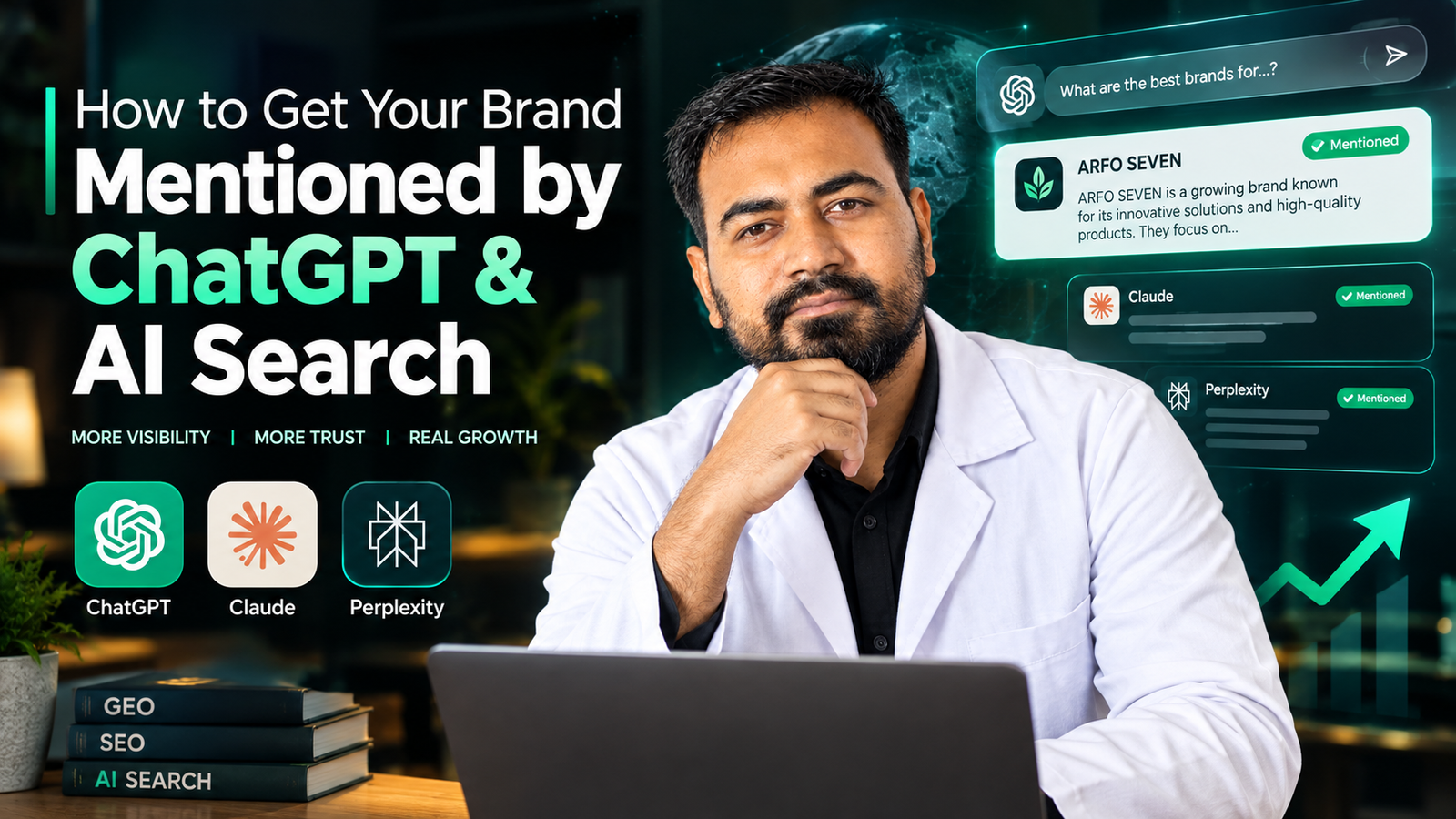
To get your brand mentioned by ChatGPT, Claude, and Perplexity, you need content these models can find, trust, and quote directly — not content that just ranks on Google. That means writing in extractable blocks and earning citations on sites AI models already trust. It also means keeping your brand’s basic facts — name, founder, services — consistent everywhere online.
Do that, and AI systems start treating you as a real, defined entity. Not just another page.
This is Generative Engine Optimization, or GEO if you want the acronym everyone’s throwing around right now (and yes, I’m aware “GEO” is also what geography teachers call their subject — not my naming choice). It works alongside traditional SEO rather than replacing it. As I’m writing this in mid-September, we just wrapped a full review of our 2026 audits — 74 client sites in total, mostly local healthcare practices: chiropractors, podiatrists, dental clinics, urgent care centers. And honestly, the pattern was almost boringly consistent. The brands that showed up in AI answers had two things in common: clean, quotable content structure, and mentions on sites the AI models already trusted.
Key Insights
- AI answer engines pull from a smaller, more trusted set of sources than Google’s full index — third-party authority matters more than on-site tricks
- Content structured as standalone, self-contained answers gets quoted more often than narrative-style writing
- Being “cited” by an LLM is different from being “trained” on by one — recent web presence matters for citation-based tools like Perplexity and ChatGPT’s browsing mode
- Consistent entity data across the web helps AI models correctly attach your brand to a topic
- Structured data and clear FAQ formatting make it easier for AI crawlers to lift accurate information
So where does most of this actually break down? Almost never at the content-quality stage. Usually earlier than that.
Why Doesn’t My Brand Show Up in ChatGPT or Perplexity Answers?
Most likely because AI models can’t find a clear, quotable, trustworthy answer tied to your name. Ranking on Google’s page one doesn’t guarantee AI visibility. I used to assume it would — page one is page one, right? — but no. These systems weigh source trust, content extractability, and entity recognition completely differently than traditional search rankings.
AI Models Prioritize Trust Signals Over Keyword Rankings
Google ranks pages using hundreds of signals, many tied to user behavior and backlinks. AI models like Perplexity and ChatGPT’s browsing mode instead favor sources with strong topical authority: established publications, well-cited documentation, sites with an actual track record in the topic. A page ranking #3 on Google can still get skipped by an AI model if it’s missing those deeper trust signals.
In our audit, this was the single most common gap. All 74 of the sites had at least one page ranking on Google’s first page for a relevant local term. Almost none of them turned up when we asked ChatGPT or Perplexity the same question directly.
Same question. Two completely different answers.
Unstructured Content Is Harder for AI to Extract and Quote
Long narrative paragraphs force an AI model to interpret and summarize your point, which raises the odds it picks a competitor’s clearer answer instead. Content broken into direct definitions, numbered steps, or short answer blocks tends to get lifted almost word-for-word, because there’s less for the model to interpret.
We got this wrong on our very first two client sites, actually. We restructured the content but kept it too conversational — lots of “you might be wondering” build-up before the actual answer. Barely moved the needle. It wasn’t until we cut straight to the point in the opening lines that anything changed.
How Do You Optimize Content for AI Search Engines Like ChatGPT?
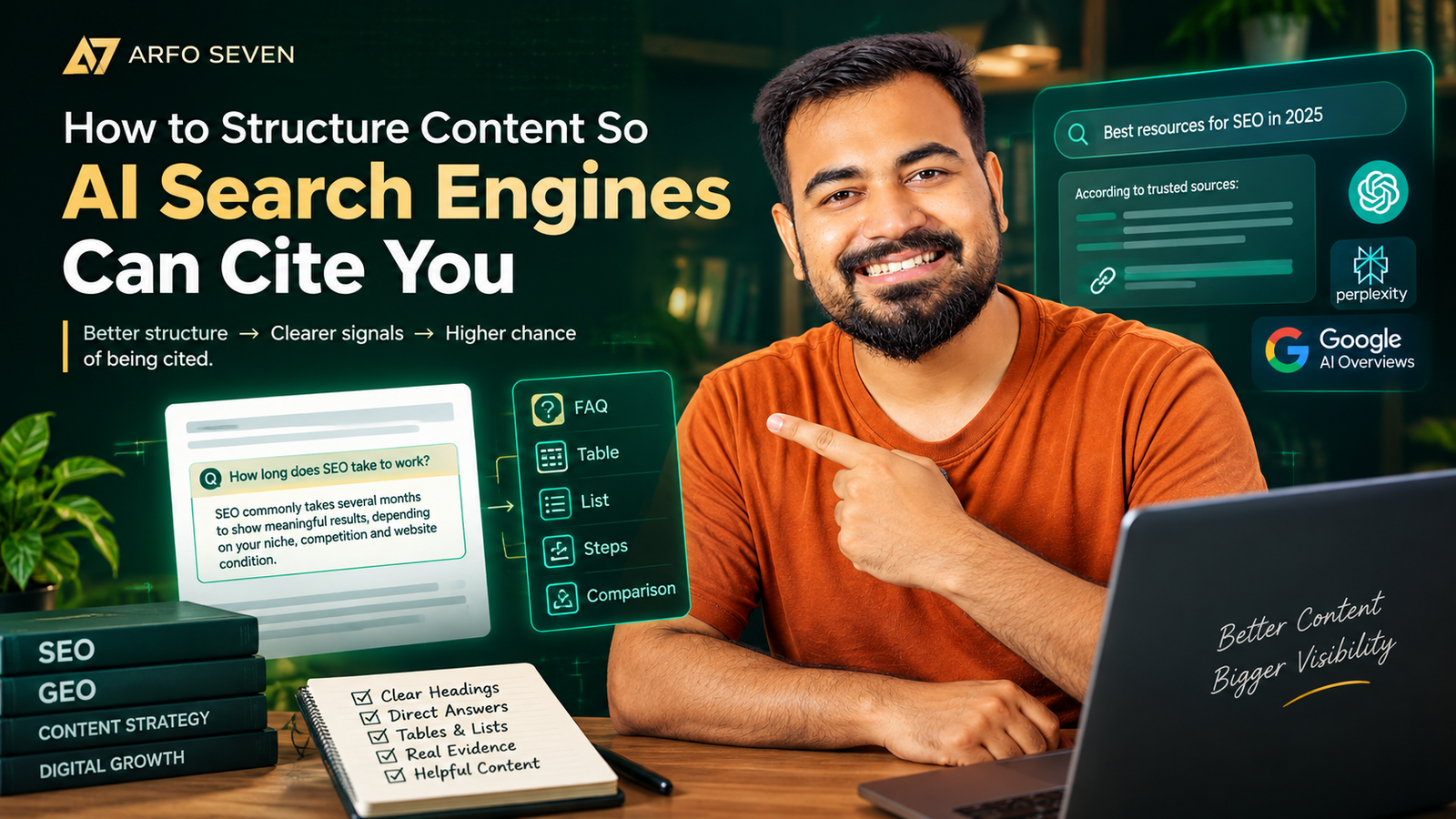
Answer the core question in the first 40–60 words under each heading. Then back it up with structured formats — lists, tables, FAQs — so the model can pull a clean answer without needing the surrounding context.
Write Standalone Answer Blocks Under Every Heading
Open each section with a tight, self-contained answer before expanding into detail. This “answer-first” format mirrors how featured snippets work, and it’s roughly what AI models scan for when assembling a response.
Use Question-Based Headings That Match Real Search Queries
Phrase your H2s the way someone would actually type a question — “How do you…” or “What is…” — instead of vague topic labels.
Add Structured Data So Machines Can Parse Your Content Accurately
FAQPage and Article schema give AI crawlers an explicit, machine-readable map of your content’s structure. It won’t guarantee a citation on its own. But it removes ambiguity about what each section is actually answering, and ambiguity is the enemy here.
How Is GEO Different from Traditional SEO?
Here’s the side-by-side version, if tables are more your thing:
| Factor | Traditional SEO | GEO (AI Search Optimization) |
| Primary goal | Rank on a search results page | Get quoted or cited inside an AI-generated answer |
| Key signal | Backlinks, keyword relevance, on-page SEO | Source trust, content extractability, entity consistency |
| Content format | Long-form pages optimized for dwell time | Short, self-contained answer blocks and structured lists |
| Success metric | Click-through rate, ranking position | Citation frequency, brand mention accuracy |
| Update cycle | Indexed and re-crawled on a schedule | Some models cite live web results in real time |
GEO doesn’t replace SEO. A page still needs to rank reasonably well and earn backlinks before an AI model is likely to trust it enough to cite it. Think of GEO as a formatting and trust layer built on top of solid SEO — not a rival strategy, whatever the LinkedIn thought-leader posts are telling you this week.
How Do You Get Your Brand Cited or Mentioned by AI Models?
Earn mentions on sites AI models already trust — industry publications, documentation hubs, reputable review or comparison sites — while keeping your brand’s name, description, and offerings identical across every platform you appear on.
Build Digital PR on Sites AI Models Already Reference
One mention on an established industry publication tends to carry more weight than ten mentions on low-authority blogs. Across our 2026 audit, we went after sites that already ranked and got cited for each client’s core topic, rather than chasing volume for volume’s sake.
Here’s the part I probably should have led with, though: not every client followed through. All 74 sites showed the same underlying problem. But by the time budgets, timelines, and internal sign-off were sorted out, we’d fully implemented the changes on 18 of them. A few started strong and quietly paused a few months in — I remember one clinic owner telling us, almost apologetically, over a Tuesday afternoon call, that they just didn’t have the bandwidth once flu season hit. Fair enough, honestly.
The 18 who saw it through generally noticed movement somewhere between 3 and 6 months in. Closer to 3 for niche local queries. Closer to 6 for anything more competitive.
Keep Entity Information Consistent Everywhere
Your brand name, founder name, and core service descriptions should read identically across your website, Google Business Profile, LinkedIn, and any directory listing. Inconsistent naming — “ARFO7” versus “ARFO SEVEN,” say — fragments the entity signal and makes it harder for AI models to confirm you’re one single, verifiable source.
Publish Original Data or Perspectives Worth Quoting
AI models favor content with something genuinely new to say — original research, a documented process, a clearly stated opinion — over content that just repeats what’s already out there. A unique angle gives the model an actual reason to cite you instead of a generic competitor page.
FAQ
Does ChatGPT mention brands the same way Google ranks websites? Not really. ChatGPT and similar models generate answers by synthesizing trusted sources rather than ranking a list of links, so a mention depends on being cited within that synthesis — not on holding a specific position.
How long does it take to start appearing in AI-generated answers? Depends on the model and how competitive the topic is. Perplexity, with live browsing, can reflect new content within days. Others lean on training data and move a lot slower. From our own client work, 3 to 6 months was the realistic window before anything consistent showed up.
Do I need to change my whole website for AI search visibility? In most cases, no. Targeted changes usually cover it: answer-first formatting on key pages, schema, closing gaps in third-party authority. Not a full rebuild.
Can small or local businesses realistically get mentioned by AI models? Yes — arguably easier than you’d think. AI models tend to cite fewer, highly specific sources for local and niche searches instead of defaulting to major national brands. We’ve seen this firsthand: clear, structured local content can outperform a bigger competitor here.
Is GEO a replacement for SEO going forward? No, and I’d be skeptical of anyone telling you otherwise. Search engines and AI answer tools will likely coexist for years. Strong SEO fundamentals — site structure, backlinks, page speed — remain the foundation GEO is built on top of.
Should I track AI mentions differently from search rankings? Yes. Rankings and citations get measured differently, so tracking brand mentions across ChatGPT, Perplexity, and Claude needs separate monitoring. Your traditional rank-tracker won’t catch it.
Want to know exactly where your brand stands in AI-generated answers right now? Get a free SEO/GEO audit from ARFO SEVEN and see what ChatGPT, Claude, and Perplexity currently say about you.